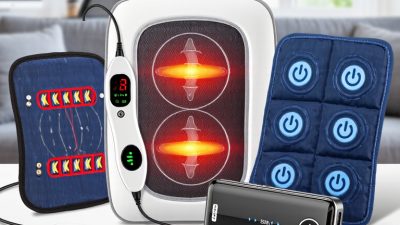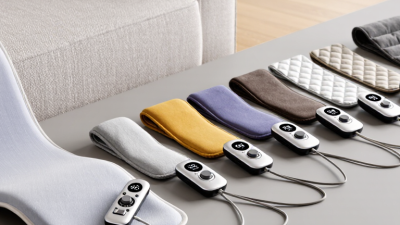
Finding a reliable Warm Pad For Back Pain supplier in China takes more than comparing prices. Buyers should look closely at product specifications, factory capabilities, communication, and after-sales support. A clear product sheet should explain dimensions, materials, heating settings, controls, and packaging. If these details are vague, ask direct questions before requesting a quotation.
A sample can reveal practical issues that a catalog may miss. Check how evenly the pad heats, whether its controls are easy to understand, and how the fabric feels against clothing. Small details matter. Do not assume a polished website proves consistent production quality. Ask whether the supplier manufactures the product or works through another factory, and request relevant quality documents for verification. Claims about pain relief should also be reviewed carefully; product descriptions are not a substitute for medical advice.
Compare suppliers using the same checklist, so quotations and specifications are easier to assess side by side. Confirm minimum order quantities, sample costs, production timelines, packaging options, and shipping terms in writing. Responsiveness is useful evidence, though it cannot guarantee future service. It is worth asking how the supplier handles defects or changes to an order. There is no perfect checklist, and some answers may still need independent confirmation. A careful search balances product performance, transparent records, and realistic communication, helping buyers narrow down suitable Chinese suppliers without relying on price or marketing claims alone.
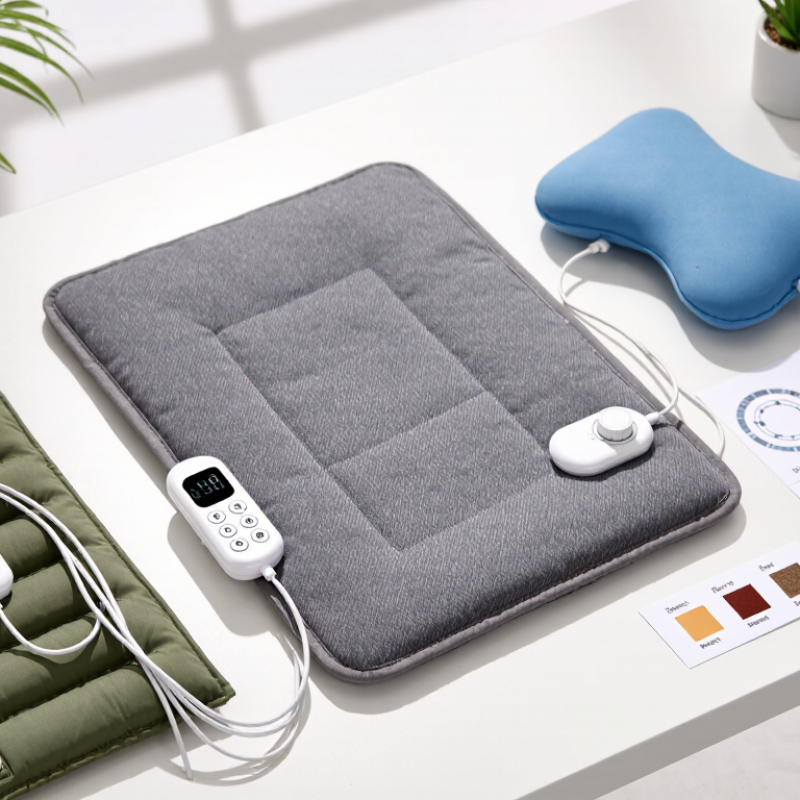
When comparing China-based warm pad suppliers, treat 40°C as a test point, not a marketing promise. Research on continuous, low-level heat for back pain has examined temperatures around this level, but results depend on the study design, wear time, and type of pain. It is a useful reference. It is not a cure.
Ask suppliers how they measure temperature across the pad, including near the edges and after several hours of use. Request test reports that identify the sensor location, room conditions, and temperature range. A single reading from the center tells you little. Check whether the controller maintains steady warmth or allows uncomfortable hot spots. Small details matter.
Review the instructions for placement, session length, and skin checks. Ask what happens if the controller or sensor fails, and whether materials remain comfortable against clothing. I would also compare sample units under the same conditions; product sheets can leave out practical differences. That is easy to overlook. Choose a supplier that answers technical questions clearly and supports cautious, consistent use.

When comparing China-based warm-pad suppliers for back pain, treat IEC 60335-2-17 evidence as a screening requirement, not a marketing claim. The standard covers household flexible heating appliances, including heating pads. Request the complete test report and confirm that its model number, rated voltage, controller, and fabric match the product being quoted. Small design changes matter.
Ask for reports from an ISO/IEC 17025-accredited laboratory. Check temperature-rise results, electric-strength and leakage-current tests, and abnormal-operation testing against the applicable standard edition. WHO’s 2023 Burns fact sheet estimates 180,000 burn-related deaths worldwide each year; this figure covers burns from all causes, not heating pads. It underlines why thermal safeguards deserve careful review.
Inspect a sample while it runs: feel for hot spots, check that the controller responds, and review the care label and user instructions. Request production inspection records and traceable component specifications, too. A polished PDF is not proof that every shipment matches the tested sample. This step is often overlooked. If a supplier cannot explain a failed test or provide a corrected report, pause procurement and investigate before placing an order. A warm pad may offer comfort, but it should not be presented as a medical treatment.
Use these six evidence checkpoints when evaluating suppliers. IEC 60335-2-17 covers blankets, pads and similar flexible heating appliances; confirm the applicable edition and destination-market requirements.
How to read: Each bar is a checklist flag, not a supplier rating or test result. Request and independently verify relevant reports, certificates and production records before treating a checkpoint as satisfied.
When comparing Chinese warm-pad suppliers, examine the certified factory scope, not just the certificate logo. ISO 9001 covers quality-management systems; it does not certify a product’s therapeutic performance. ISO 13485 is designed for medical-device quality systems, but a certificate only matters when its scope and site cover the product being made. Ask for the issuing body, certificate number, validity dates, manufacturing address, and scope. Verify these details with the certification body. A useful clue.
The ISO Survey 2022 reported 1,265,216 valid ISO 9001 certificates across 189 countries. This shows how common the standard is, not how well any individual factory performs. For a back-pain warm pad, compare documented controls for heating-element inspection, temperature calibration, electrical safety testing, lot traceability, and complaint handling. Request recent audit findings or corrective-action records, with confidential details removed. A certificate can look reassuring. It may still leave practical questions unanswered.
Tips: Ask the supplier to trace one sample unit from incoming materials to final inspection. Check that test records identify the model, test date, equipment, and acceptance limits. If the pad is marketed as a medical device, confirm that the ISO 13485 scope matches its intended use and production site; do not assume every warm pad requires that certification. Look for specifics, not promises.
When comparing China-based warm pad suppliers, request documents for the exact model, not a similar heating pad. Check the model number, product photos, report date, and manufacturer details across the EU RoHS declaration and test report. Small mismatches matter. RoHS Directive 2011/65/EU restricts certain hazardous substances in electrical and electronic equipment, subject to applicable exemptions. Ask whether the evidence covers the pad’s cable, plug, controller, and heating element.
REACH needs a separate check. It is not one universal “REACH certificate.” Ask for a current statement addressing relevant restrictions and substances of very high concern (SVHCs). Where an SVHC exceeds 0.1% by weight in an article, information duties may apply. Request material-level declarations or supporting laboratory results, and confirm which candidate-list version was used. A broad supplier statement alone may leave gaps.
Compare the paperwork with the bill of materials and the version you plan to order. If the controller changes, ask whether the existing test report still applies. Keep dated copies and clarify who supplied each document. I have seen tidy folders create false confidence; a report can be genuine yet cover another configuration. For EU sales, have a qualified compliance professional review uncertain claims, especially before a large order.
| Review area | Evidence to request | What to check | Relevant EU requirement | Practical supplier-screening result |
|---|---|---|---|---|
| Product identity and configuration | Product specification, model or SKU list, rated voltage, power, intended use, and bill of materials | Confirm that the documents cover the exact heating pad, controller, plug, cable, and materials being offered. Record any differences between models. | RoHS scope depends on the product and its intended use; confirm applicability for the specific electrical or electronic equipment. | Accept for review only when the model and configuration are traceable across all submitted documents. |
| EU RoHS conformity documentation | EU Declaration of Conformity, technical documentation, and a supporting RoHS material-compliance assessment | Check the responsible economic operator, product identification, applicable legislation, signature, and document date. A test report should identify the tested samples and methods. | Directive 2011/65/EU, as amended. A single generic “RoHS certificate” is not a substitute for the required conformity assessment and technical documentation. | Request corrections if the model is missing, the declaration is unsigned, or the evidence cannot be linked to the offered product. |
| RoHS restricted substances | Material declarations, supplier declarations, and risk-based test reports for relevant components and materials | Check results against the applicable maximum concentration values in each homogeneous material, and confirm whether any valid exemption is relied upon. | RoHS limits are 0.1% by weight for each homogeneous material for most restricted substances and 0.01% for cadmium, subject to applicable exemptions and amendments. | Treat unsupported blanket claims as incomplete; ask for material-level evidence or a documented compliance assessment. |
| REACH substances of very high concern (SVHCs) | Current SVHC communication declaration and supporting substance or material information | Check the declaration against the current Candidate List and confirm whether any listed SVHC is present above 0.1% weight by weight in an article. | Under REACH Article 33, suppliers of an article must communicate relevant information, including at least the substance name, when a Candidate List SVHC is present above 0.1% w/w. | Request substance identity and affected article/component details when the threshold is exceeded; “REACH compliant” alone is not enough detail. |
| REACH restrictions and SCIP information | REACH Annex XVII assessment and, where applicable, SCIP submission information | Check restrictions relevant to the product’s materials and intended use. If an article contains an SVHC above 0.1% w/w, confirm whether the applicable SCIP duty has been addressed by the responsible EU operator. | REACH Regulation (EC) No 1907/2006, including Annex XVII restrictions and the applicable waste-framework SCIP requirements. | Record the substance, affected component, and responsible party; do not treat a RoHS report as evidence of REACH compliance. |
| Test report quality and traceability | Full laboratory report, sample photographs or identifiers, test dates, methods, and laboratory accreditation details | Verify the tested sample matches the current model and materials. Check report scope, sample description, results, and whether the laboratory’s accreditation covers the relevant tests. | Testing can support a conformity assessment, but a test report by itself does not establish conformity for every product configuration or replace the manufacturer’s responsibilities. | Reject reports with unclear sample identity, incomplete pages, or a different model unless the supplier provides a documented technical justification. |
| Change control and ongoing compliance | Written notification procedure for changes to materials, components, manufacturing sites, and product design | Confirm that compliance documents will be reviewed and updated when a material or component changes, and agree on advance notice for changes affecting supplied goods. | RoHS and REACH assessments must reflect the product and substances placed on the EU market; Candidate List and legal requirements may change over time. | Prefer a documented change-control process and retain the approved document revision for each purchase order. |
| Commercial and shipping records | Commercial invoice, packing list, transport document, and applicable customs information | Check that product descriptions, quantities, and model references agree across shipment documents. These records support import and traceability but do not prove chemical compliance. | Customs and transport documents serve different purposes from RoHS technical documentation and REACH substance communication. | Keep shipping records separate from compliance evidence and cross-reference them to the relevant product and order. |
| Supplier decision | Completed document checklist and written responses to any gaps | Assess product-document match, RoHS evidence, REACH disclosures, traceability, and change control before placing an order. | CE marking is not, by itself, proof of RoHS or REACH conformity; review the applicable legal requirements and supporting evidence separately. | Proceed only after material gaps are resolved and the EU importer’s compliance responsibilities are clearly assigned. |
When comparing shortlisted China suppliers, rank them with the same evidence rather than polished sales claims. Request 40°C test records for the actual pad model, including test duration, sensor position, room conditions, and instrument calibration. Ask whether readings come from repeated tests or a single sample. Numbers can mislead. A surface reading of 40°C does not prove that every area heats evenly or that temperature remains stable during use. Where possible, review dated test sheets and verify key results with a sample evaluated under consistent conditions.
Build a simple scorecard for temperature performance, MOQ, lead time, and warranty. Record the minimum order in units, not vague terms such as “flexible.” Ask whether the quoted lead time starts after deposit, artwork approval, or sample confirmation. For warranty terms, check coverage period, exclusions, and how a faulty unit is handled. Keep the same scoring weights for every supplier; otherwise, a low MOQ may unfairly outweigh weak test evidence.
One limitation: supplier-provided records are not independent verification. If a sample differs from the production batch, revise the ranking before placing a larger order.