Leave Your Message
Global buyers comparing 2026 foot detox patch manufacturers need more than polished packaging and bold wellness claims. They need clear ingredient lists, consistent production records, responsive communication, and samples that match the final product. A patch’s darkened appearance after use is not, by itself, proof that toxins have left the body.
Edzard Ernst, a physician and researcher in complementary medicine, has described detox as “a marketing myth.” His caution is relevant here: buyers should separate product presentation from evidence of health effects. That distinction is easy to miss. It deserves a second look. This guide focuses on practical supplier checks, including ingredient transparency, quality-control procedures, packaging options, order flexibility, and export documentation. These details help buyers compare manufacturers without treating marketing language as clinical proof.
Ask for current specifications and written answers about testing, traceability, and batch consistency. Check whether sample materials, labels, and production timelines align with your requirements. Small details matter. A vague ingredient response or an unexplained change in patch color can raise questions worth resolving before an order. This overview is not a medical assessment, and supplier claims should be independently reviewed. Even a well-organized comparison has limits; the available evidence may not answer every question buyers bring to the Patch Detox Foot category.

Foot detox patches are adhesive pads worn on the soles, usually overnight. They typically combine a soft nonwoven backing, an absorbent pouch, adhesive, and a removable liner. The pouch may contain plant powders, mineral ingredients, or other dry materials. Formulas vary, so buyers should request a full ingredient list and material specifications.
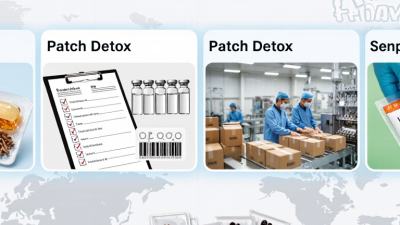
Manufacturing commonly involves weighing and blending dry ingredients, filling small pouches, laminating them onto backing, and die-cutting each patch. Workers then check pouch weight, seal strength, adhesive tack, and package integrity. Moisture control matters; a damp pouch can clump or weaken during storage. Small details matter. The Global Wellness Institute’s 2024 Global Wellness Economy Monitor valued the broader wellness economy at $6.3 trillion in 2023. That figure describes the whole sector, not detox-patch sales. It signals market scale, not proof of product performance. The U.S. National Center for Complementary and Integrative Health notes limited evidence for detox and cleanse claims generally; patch-specific benefits should therefore be assessed cautiously. A darkened used patch alone does not establish that toxins left the body.
Non-ranked sourcing guide. Formulas and manufacturing methods vary by supplier; the entries below describe common product features and buyer checks, not verified claims about specific manufacturers.
| Topic | General product or process information | What global buyers can verify |
|---|---|---|
| What the product is | A foot detox patch is typically a disposable adhesive patch worn on the sole of the foot, often overnight. It commonly has a backing layer, an adhesive area, and a sachet or pad containing a powder blend. | Request the product specification, intended-use statement, complete ingredient list, and instructions for use. |
| Common ingredients | Formulas vary. Some products list plant-derived powders or extracts, starches, minerals, or vinegar-derived ingredients. Ingredient presence and proportions should be confirmed from the specific product's documentation. | Check ingredient identity, supplier documentation, allergen information, and applicable restrictions for each destination market. |
| Patch materials | Depending on the design, the patch may use a nonwoven or similar backing, a pressure-sensitive adhesive, and a permeable sachet or pad to hold the powder blend. | Ask for material specifications, adhesive information, and evidence that the finished patch remains intact and adheres as intended during normal use. |
| Typical manufacturing sequence | A general process may include incoming-material checks, weighing and blending ingredients, filling sachets or pads, converting and cutting patch components, assembly, individual pouch sealing, and finished-product inspection. The actual sequence depends on product design and equipment. | Request a process flow, batch traceability details, and records showing how in-process and finished-product checks are performed. |
| Quality and safety checks | Relevant controls may include ingredient identity and condition, fill consistency, pouch-seal integrity, packaging checks, and documented handling of nonconforming batches. The exact testing plan should match the product and applicable requirements. | Review sample batch records, test methods and results, complaint procedures, and any certifications claimed. Confirm their scope, issuing body, and validity independently. |
| Packaging and labeling | Individual sealed pouches are commonly used to protect patches from contamination and moisture. Label requirements differ by country and may cover ingredients, directions, warnings, responsible-party details, and language. | Have destination-market labels reviewed before production. Verify packaging compatibility, lot identification, storage instructions, and any required local-language information. |
| Claims and evidence | A dark or discolored used patch is not, by itself, evidence that toxins have been removed from the body. Claims that a patch detoxifies the body should be assessed against reliable evidence and the rules in each target market. | Ask for substantiation for each marketing claim and obtain regulatory review before using health or detoxification claims in advertising or on packaging. |
| Supplier comparison | There is no single specification that applies to every foot patch. Suitability depends on the formula, materials, quality controls, documentation, production capacity, and destination-market requirements. | Compare documented specifications and sample results, clarify minimum order quantities and lead times in writing, and qualify suppliers through a consistent audit and approval process. |
Note: This table is general purchasing information, not a ranking, certification, medical recommendation, or confirmation that any particular product or supplier meets a specific market's requirements.