
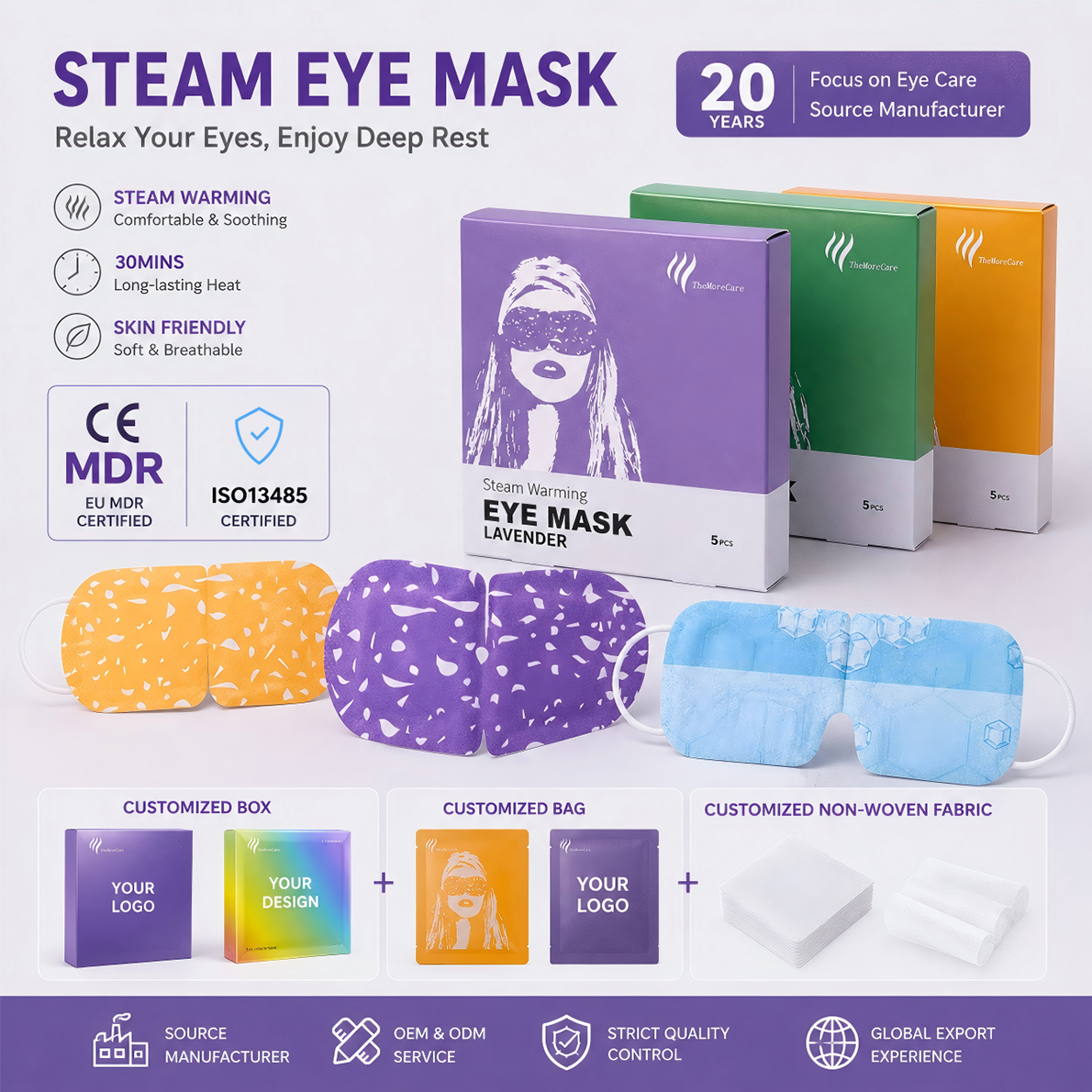
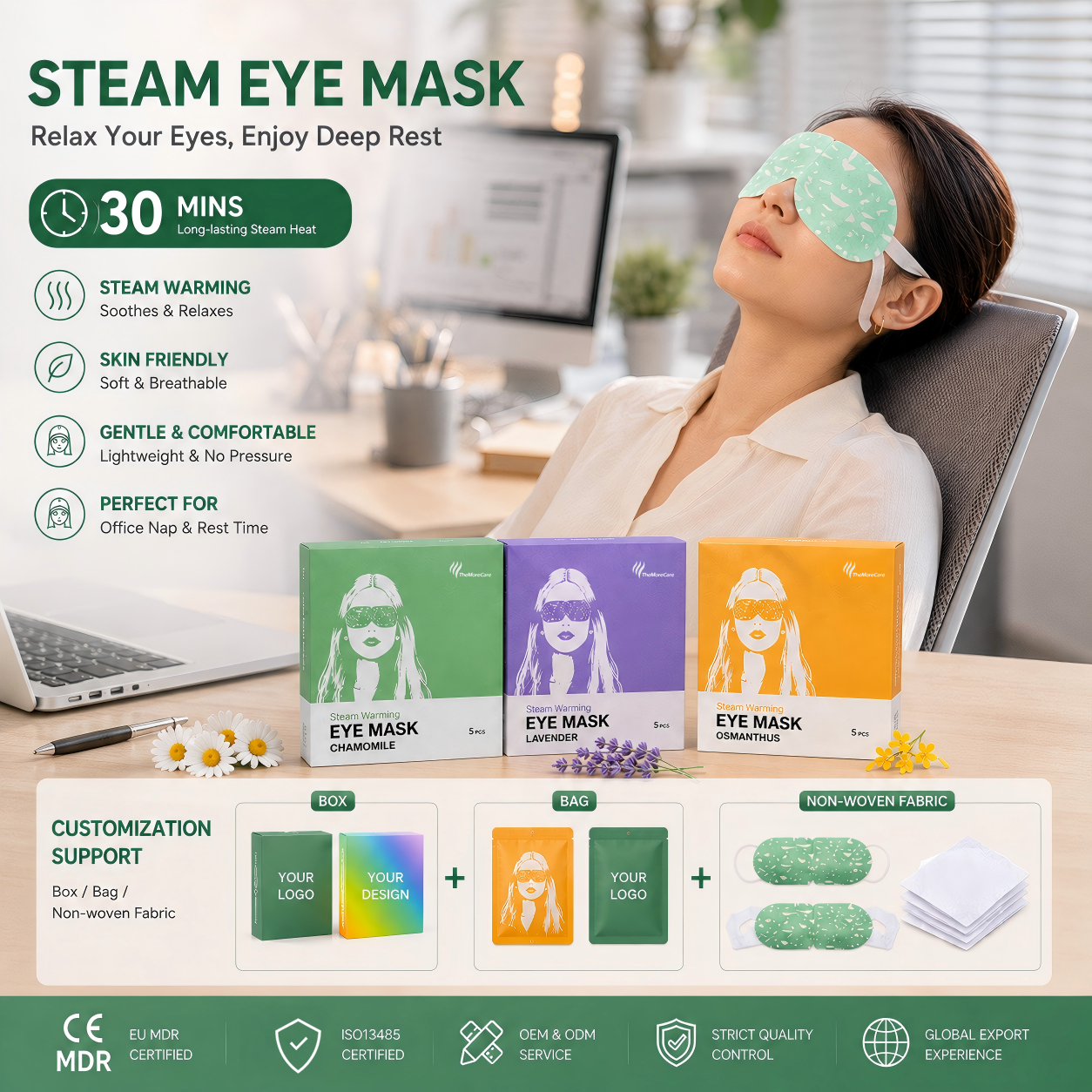
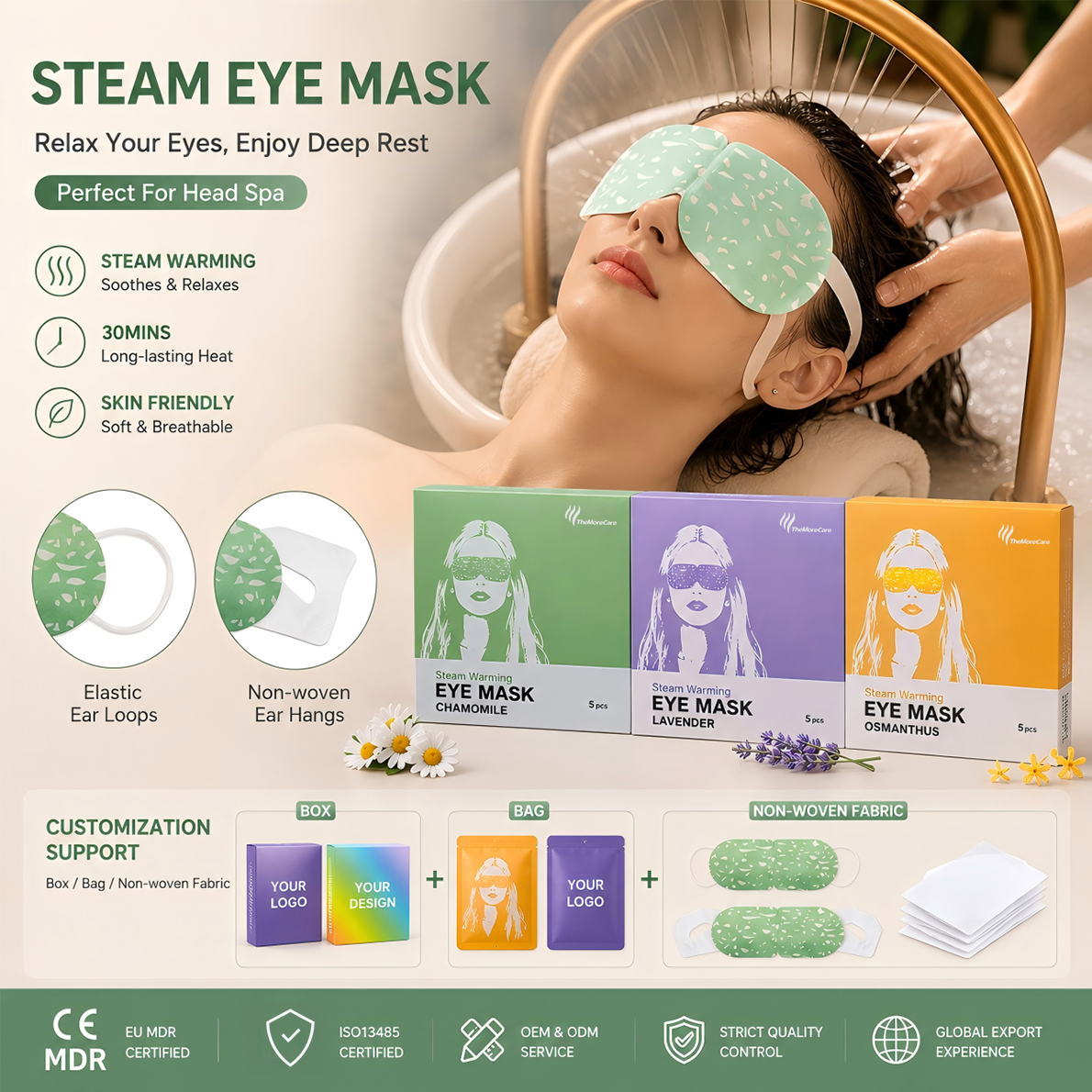


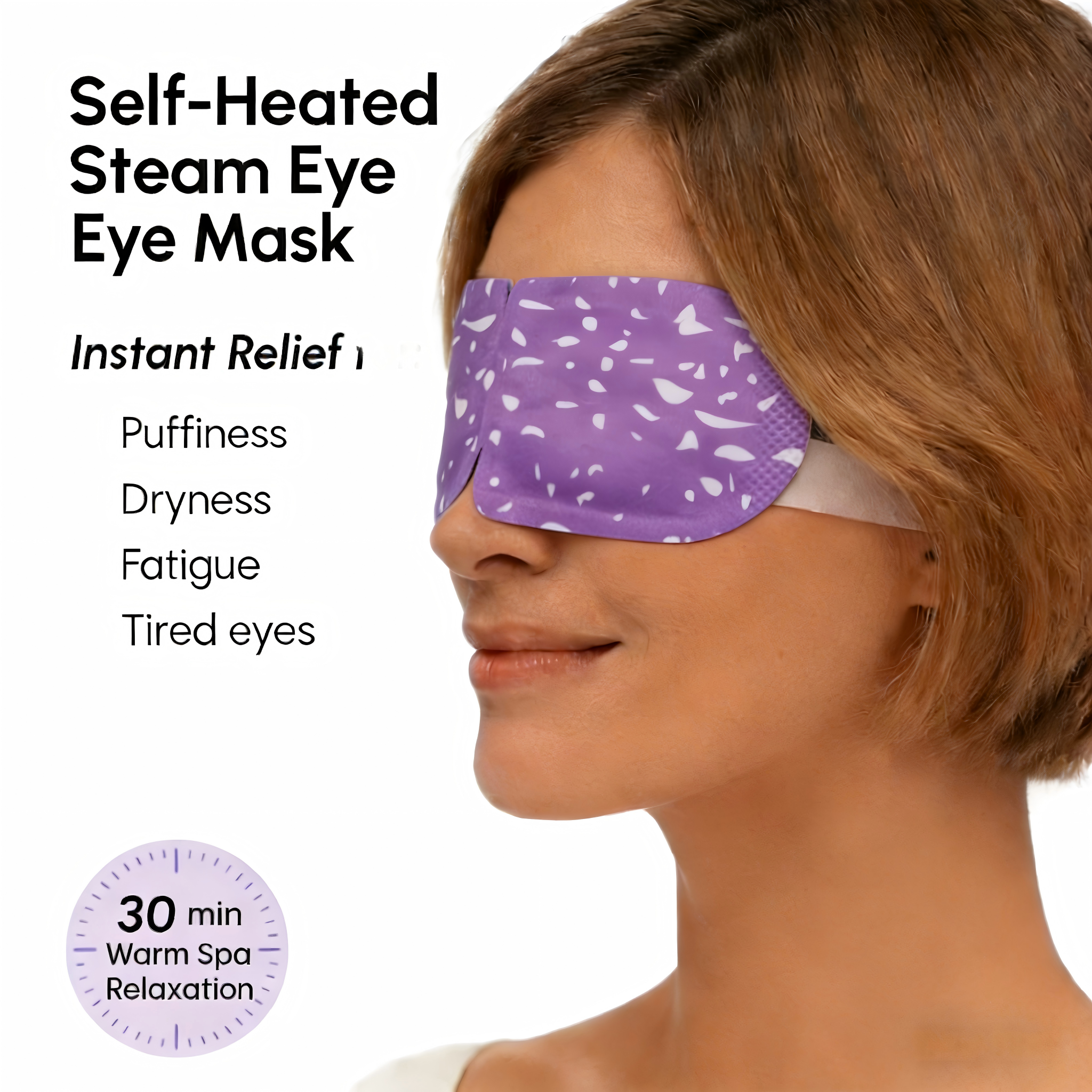
Steam Eye Mask Certifications & Compliance: What Importers Need to Know
Steam Eye Mask Certifications & Compliance: What Importers Need to Know
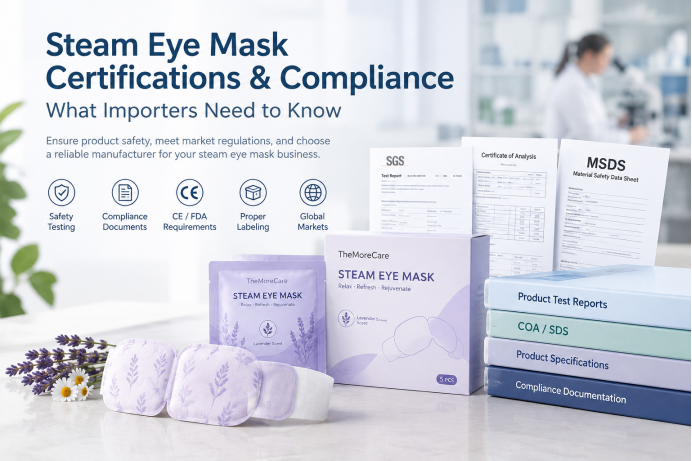
1. Why Compliance Matters When Sourcing Steam Eye Mask
A steam eye mask is designed to come into close contact with the sensitive area around the eyes. Buyers therefore need to consider more than appearance and heating performance. Before production, brands should understand:
- What the product is intended to do
- Which market it will be sold in
- What testing is required
- What information must appear on the packaging
- Which documents the manufacturer can provide
- Whether marketing claims could change the regulatory requirements
Confirming these points before mass production is beneficial for reducing delays, relabeling costs and compliance risks.
2. Start With Product Classification and Intended Use
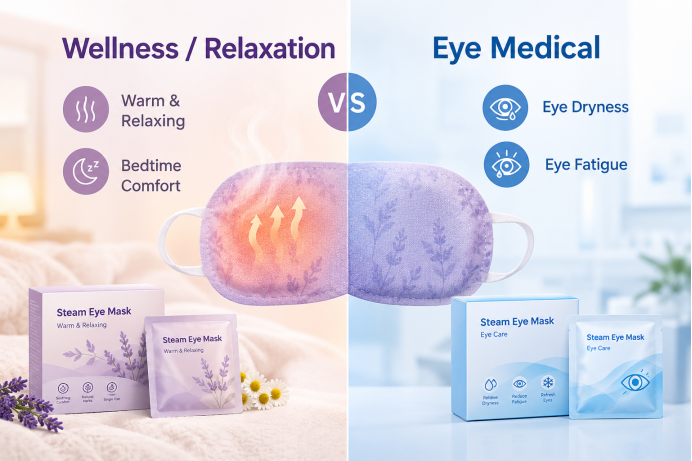
One of the most important steps is defining the product's intended use. A steam eye mask marketed for relaxation and comfort may be treated differently from a product promoted as treating a medical condition.
For example, claims such as:
- “Helps you relax before sleep”
- “Provides gentle warming comfort”
- “Ideal for bedtime relaxation”
It's very different from claims such as:
- “Treats dry eye”
- “Cures insomnia”
- “Treats eye disease”
The classification of medical devices in the United States is to some extent determined by the intended use and indications of the product. Therefore, for importers, before designing the packaging, they must clearly define the intended use and marketing claims of the product.
3.Key Documents that Buyers Should Request
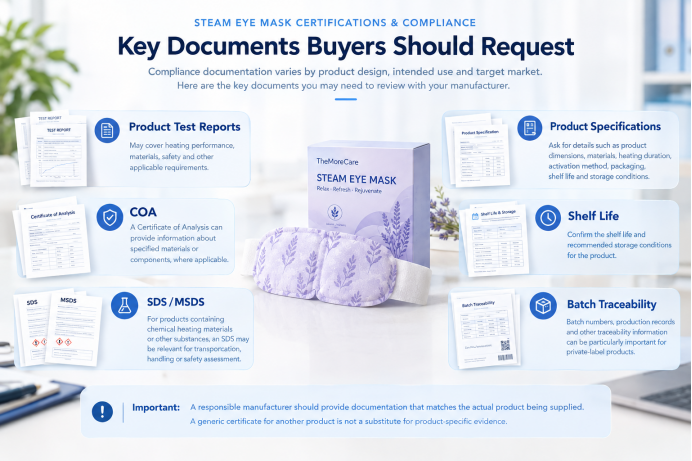
Before placing OEM or private-label order, please ask the manufacturer what documentation is available for the specific product. According to the product and market, useful documents may include:
Product Test Reports
These may cover areas such as heating performance, materials, safety, or other applicable requirements.
COA
A Certificate of Analysis can provide information about specified materials or components, where applicable.
SDS/MSDS
For products containing chemical heating materials or other substances, SDS may be relevant for transportation, handling or safety assessment.
Product Specification
Ask for details such as:
- Product dimensions
- Materials
- Heating duration
- Activation method
- Packaging
- Shelf life
- Storage conditions
Traceability Information
Batch numbers, production records, and other traceability information can be particularly important for private-label products. Important: A responsible manufacturer should provide documentation that matches the actual product being supplied. A generic certificate for another product is not a substitute for product-specific evidence.
4. EU Compliance: CE, GPSR and Labeling
One common misunderstanding is that every steam eye mask needs CE marking. This is not necessarily the case. CE marking applies to products covered by specific EU harmonisation legislation. Products outside those rules may instead be subject to general product safety requirements.
Therefore, buyers should first determine which EU rules actually apply to their product. For consumer products, buyers should also consider applicable general product safety requirements, packaging, instructions, warnings, traceability, and language requirements. If you are selling under your own brand, remember that your responsibilities may be different from those of the factory.
Do not simply ask, “Does this product have CE?” Ask instead, “Which EU requirements apply to this specific product, and what evidence demonstrates compliance?”
5. US Compliance: FDA and Product Safety
For the US market, the first question should not simply be: “Does the steam eye mask have FDA approval?” On the contrary, the determination should be made based on the intended use of the product and its claimed content to assess whether it falls within the regulatory scope of the FDA.
If the product is marketed as a medical device, additional regulatory requirements may apply. The FDA explains that the intended use and indications are important factors in determining whether a product is a medical device. For a general wellness or relaxation product, buyers should still review:
- Product safety
- Material information
- Packaging
- Instructions and warnings
- Marketing claims
- Applicable testing
Avoid using “FDA certified” as a generic marketing statement unless you have verified that the specific regulatory status and terminology are appropriate.
6. UK Compliance: GB and Northern Ireland
The UK market also requires careful attention because Great Britain and Northern Ireland have different regulatory frameworks. In the UK, the "General Product Safety Regulations" of 2005 set the basic standards for consumer product safety. The product must remain safe under normal use or reasonable foreseeable usage conditions. The manufacturers and importers are responsible for the safety information and traceability of the product.
Therefore, for brands selling in the UK, it is crucial to clearly specify the specific destination and review the applicable requirements of the market.
7. Heat and Skin-Safety Testing
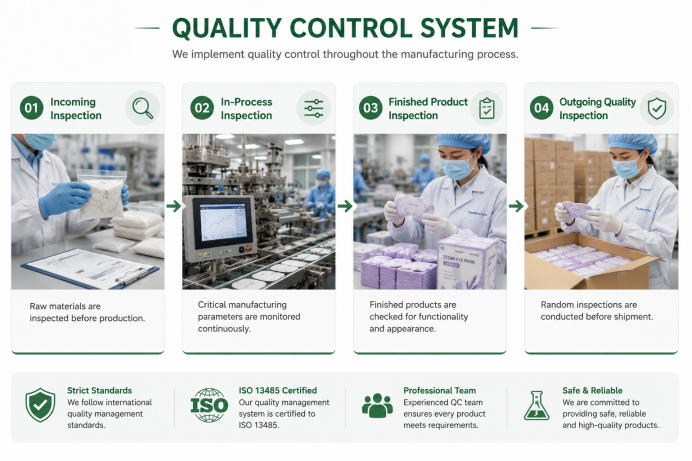
For heated eye mask, heat performance is an important part of product quality. A professional manufacturer should have a process for evaluating factors such as:
- Heating consistency
- Heating duration
- Activation performance
- Product integrity
- Skin-contact materials
- Packaging integrity
- Storage stability
- Batch consistency
The specific testing requirements depends on the product design and target market.
8. Packaging and Labeling Are Part of Compliance
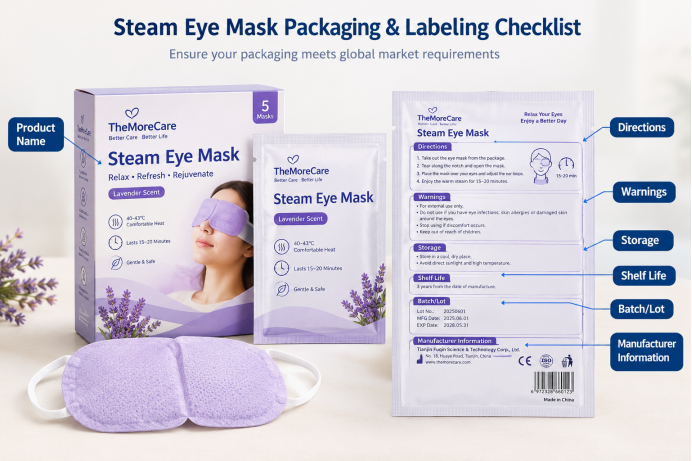
Your packaging is not only a branding tool. It may also communicate important product and safety information. Depending on the market and product, packaging may need information such as:
- Product name
- Directions for use
- Warnings
- Materials or ingredients where applicable
- Batch or lot information
- Shelf-life information where required
- Manufacturer or importer information
- Storage instructions
- Relevant market-specific information
The labels should also accurately reflect the functions of the products. This is particularly important for private-label warming eye mask, because the brand owner may control the final packaging and marketing promotion content.
9. Be Careful With Medical Claims
For private-label products, changing the marketing language can sometimes affect compliance. For instance, there are significant differences between the following:
Wellness-focused claim: “Enjoy a warm, relaxing experience before bedtime.”
Medical claim: “Treats dry eye symptoms.”
The second type of claim may trigger additional regulatory considerations depending on the market. Before printing thousands of retail boxes, have your product claims reviewed against the requirements of your target market.
10. Self Heating Eye Mask Compliance Checklist for Buyers
Before placing bulk order, please review the following checklist:
☐ Confirm the target market
☐ Define the intended use
☐ Review marketing claims
☐ Confirm product specifications
☐ Request applicable test reports
☐ Request COA/SDS where relevant
☐ Confirm heating performance
☐ Review shelf-life information
☐ Check packaging and labeling
☐ Confirm batch/lot traceability
☐ Validate samples before mass production
☐ Confirm change-control procedures with the manufacturer
This process help identify potential issues before the product arrives at the warehouse, rather than after.
FAQ
Do all steam eye masks need FDA approval?
No. It depend on the intended use of the product, the promotional content and whether it conforms to the definition of a medical device.
Is CE required for every steam eye mask?
No. The CE mark is only applicable to products that comply with the specific EU regulations and require the use of the CE mark.
What documents should I request from manufacturer?
Depending on the product, you may need to request test reports, certificates (COA), safety data sheets (SDS/MSDS), product specifications, expiration date information and traceability information.
Conclusion
When choosing a compliant manufacturer of steam eye masks, it is not only about finding a supplier with attractive packaging and competitive prices. Before placing an order for OEM or private label products, buyers should understand the product's purpose, target market, applicable regulations, testing requirements, labeling and identification, as well as related supporting documents.
An excellent manufacturing partner should be able to clearly discuss these requirements and provide relevant documentation that matches the actual supplied products. If you are developing custom steam eye masks, own-brand products or OEM projects, it is best to review the compliance requirements during the product development stage rather than after large-scale production.
TheMoreCare offers support for OEM and private label steam eye mask projects, including product customization, packaging development, and manufacturing assistance for international brands.