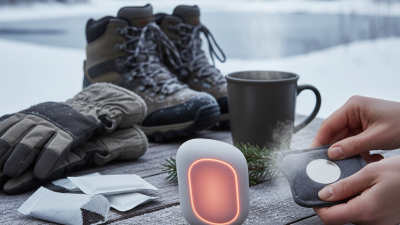
A body warmer is more than a pocket-sized source of heat. It is a practical tool for reducing the discomfort caused by cold air, wind, and low outdoor temperatures. Some warmers use iron powder and oxygen to create gentle heat. Others rely on rechargeable batteries and thin heating elements. Heated vests, patches, belts, and hand warmers all follow the same basic goal: keep key areas warmer while the surrounding air remains cold.
Dr. Wouter van Marken Lichtenbelt, a leading thermophysiology researcher, has said, “We are not made for a constant temperature of 21°C.” This observation helps explain why Warmer Body products can feel useful outdoors. The human body continuously produces heat, but it also loses heat through exposed skin, damp clothing, and moving air. A warmer adds local support. It does not replace suitable clothing.
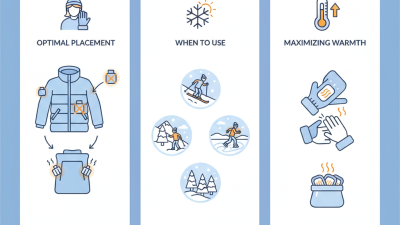
The effect depends on placement. A warmer near the chest or back may feel different from one inside a glove. Fabric thickness, battery power, airflow, and personal sensitivity also matter. Real use is messier. A product that feels comfortable during a slow walk may feel too warm during active work. That detail deserves attention.
This article examines what a body warmer is, how its heat is produced, and why different designs perform differently. It also considers comfort, ventilation, safe handling, and realistic expectations. Warmth should feel steady, not extreme. In the end, good design is not simply about producing more heat. It is about delivering useful warmth without distracting the wearer from the day.
A body warmer is a sleeveless garment designed to keep the torso warm without restricting the arms. It usually covers the chest, back, and waist. Unlike a heavy coat, it allows easier movement while adding an extra layer. The main types are insulated and electrically heated body warmers.
Insulated body warmers retain body heat through materials that trap air. Common fillings include synthetic fibers or natural down. The outer fabric often blocks wind and light moisture. In practice, a well-fitted vest feels warm across the back but may leave the hands cold. Layering still matters. Poor sizing can compress the insulation and reduce its effectiveness. That detail is easy to overlook.
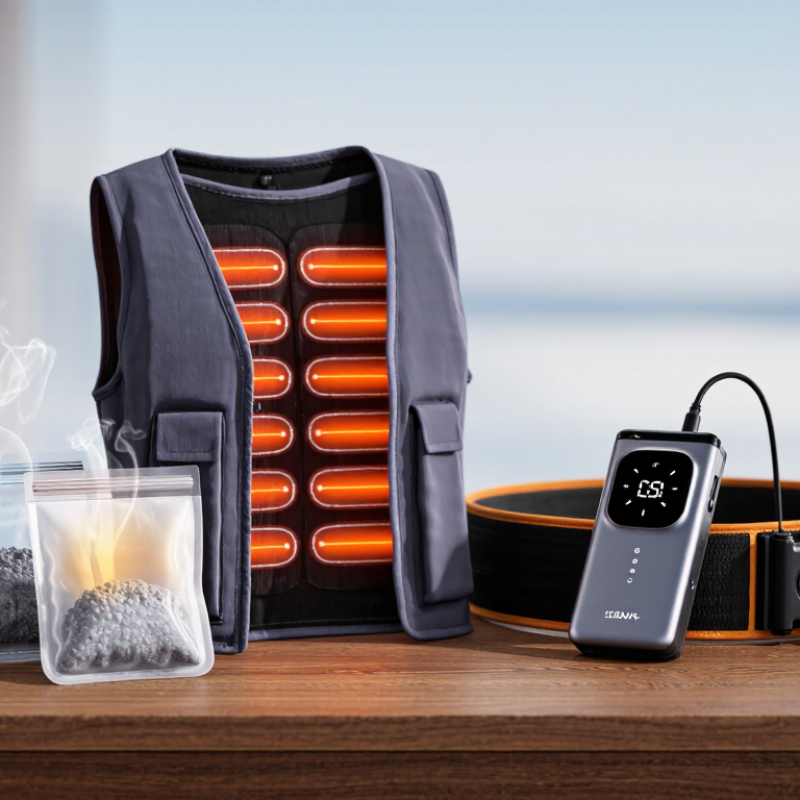
Electrically heated body warmers use thin heating elements, usually around the chest or back. A rechargeable battery supplies controlled warmth through selectable heat settings. They can feel useful during slow outdoor work or long periods of standing. However, warmth depends on battery capacity, clothing layers, and outside temperature. Check the care instructions before washing. Inspect cables, connectors, and fabric regularly. Never ignore unusual heat or damage. Neither type is perfect. Choosing between them depends on activity, weather, fit, and personal comfort.

A body warmer is a wearable layer designed to reduce heat loss around the chest, back, or abdomen. Some use insulated fabric, while others generate heat through electrical elements or chemical reactions. Its purpose is not to make the whole body hot. It helps protect the body’s core temperature in cold conditions.
Conduction happens when heat moves through direct contact. A warm inner panel transfers heat to a shirt, then to the skin. Soft, close-fitting materials usually improve this contact. Convection works differently. Cold air can circulate beneath loose clothing and carry warmth away. A body warmer slows this movement by trapping still air inside its insulation. Small air pockets matter.
Radiation is heat moving outward as invisible infrared energy. The human body constantly radiates warmth, especially from exposed areas. Reflective inner layers can redirect some radiant heat toward the body. They do not create heat, though. That distinction is easy to miss. In real use, I notice the biggest difference when the warmer fits closely but does not compress clothing flat. Too much space increases drafts. Too much pressure reduces insulation.
Moisture changes the experience. Sweat can make fabric feel cold after activity, even when the warmer still produces heat. Breathable layers help release vapor, but no design works perfectly in every condition. Wind, movement, humidity, and personal circulation all affect performance. Temperature controls should be used carefully, because warmth can feel comfortable before the skin becomes irritated.
A body warmer uses low-voltage heating elements to add warmth beneath or within a layer of clothing. The elements may draw roughly 5–20 W, depending on their design and selected setting. That figure describes electrical power, not a guaranteed garment temperature. Airflow, fabric thickness, and fit all affect how warmth feels against the body. Heat is local.
Many systems use a 7.4 V battery pack. Voltage alone does not reveal how long it will run; battery capacity, power setting, and control circuitry matter too. A higher setting generally uses energy faster, while intermittent output can extend use. It varies. Cold conditions can also reduce a battery’s effective performance, so advertised runtime may not match a windy walk or a long wait outdoors.
Zoned output directs heat to selected areas, such as the chest, back, or pockets. This can feel more efficient than warming the whole garment evenly, especially when the body’s core needs extra warmth. Element placement matters: a panel under a backpack strap may feel different from one with clear space around it. Controllers may cycle power to manage temperature, but comfort still depends on clothing layers and personal sensitivity. Try the garment indoors first, and check its instructions for charging and care. A tidy heat map on paper can be imperfect in real wear.
| Dimension | Illustrative value or configuration | How it works | Practical interpretation |
|---|---|---|---|
| Purpose | Wearable, battery-powered supplemental heat | Resistive heating elements convert electrical energy into heat, which is transferred through the garment to the wearer. | A body warmer adds local warmth; it does not replace suitable clothing or serve as a medical treatment. |
| Heating-element power | About 5–20 W for an illustrative system | Electrical power is the rate at which energy is used. A higher setting generally draws more power and produces heat more quickly. | Check whether a stated wattage applies to the whole garment or to an individual element; the distinction changes total power use. |
| Battery-pack voltage | 7.4 V nominal | A 7.4 V pack is commonly formed from two lithium-ion cells connected in series. Its voltage changes with charge level and load. | Nominal voltage is a system rating, not a guarantee that the pack supplies exactly 7.4 V at every moment. |
| Current at 7.4 V | Approximately 0.68 A at 5 W; 2.70 A at 20 W | Using the electrical relationship I = P ÷ V: 5 W ÷ 7.4 V ≈ 0.68 A, while 20 W ÷ 7.4 V ≈ 2.70 A. | These are approximate operating-current calculations; actual current depends on the circuit, battery voltage, and control method. |
| Element resistance | Approximately 10.95 Ω at 5 W; 2.74 Ω at 20 W, when supplied at 7.4 V | For a simple resistive load, resistance can be estimated with R = V² ÷ P. | These calculated values illustrate the relationship between voltage, power, and resistance; real garments may use different element layouts and control electronics. |
| Battery energy example | 7.4 V × 2 Ah = 14.8 Wh nominal energy | Watt-hours (Wh) estimate stored energy from nominal voltage and amp-hour capacity. | Capacity varies by pack. Usable energy is typically lower than the nominal estimate because of conversion losses, battery cut-off limits, temperature, and ageing. |
| Idealized runtime example | 14.8 Wh ÷ 5 W ≈ 2.96 h; 14.8 Wh ÷ 20 W ≈ 0.74 h | Runtime is estimated as battery energy in Wh divided by average load in W. | These are idealized continuous-output calculations, not guaranteed wear times. Real runtime is usually shorter and may increase when the controller cycles the heat. |
| Heating zones | One or more independently controlled areas, such as the front torso, back, or collar | Separate zones let a controller direct power to selected elements rather than heating every area equally. | Zone count and placement differ by garment. Switching off unused zones can reduce energy use, depending on the design and selected settings. |
| Output control | Low, medium, and high settings, or a temperature-controlled cycle | A controller can vary power directly or switch an element on and off to manage average output. | Setting names and actual temperatures are not standardized. Output also depends on clothing layers, fit, airflow, and ambient conditions. |
| Temperature sensing and protection | May include sensors, current limits, and battery protection | Control electronics can monitor operating conditions and limit or interrupt power when required by the design. | Use and care instructions matter: stop using a garment if its wiring, connector, battery, or heating area is damaged or unusually hot. |
| Heat distribution | Element layout beneath or within fabric layers | Fabric, insulation, garment fit, and airflow affect how heat reaches the body and how quickly it escapes. | Watts alone do not determine comfort; placement and garment construction also influence the perceived warmth. |
Values are illustrative engineering calculations, not specifications for a particular garment. Actual power, runtime, and temperature depend on the battery, controller, heating-element layout, and conditions of use.
A body warmer uses electrical energy to create gentle heat around the torso. Its heating elements sit inside fabric channels, spreading warmth across the back or chest. The control system matters as much as the heating wire. A warm jacket should feel steady, not suddenly hot.
Thermistors provide that control. These small temperature-sensitive components measure heat near the warming elements. As the temperature changes, their electrical resistance changes too. A controller reads this signal and adjusts power when necessary.
Three heat levels usually offer low, medium, and high settings. Low heat suits long walks, while high heat can help during a short, cold wait. Medium is often the practical choice. Users should still check the skin regularly, especially when wearing thick clothing.
Battery safety requires more than a temperature sensor. Designs using rechargeable lithium batteries should address the requirements of IEC 62133-2, which covers safety for portable sealed secondary cells and batteries. Testing should consider overcharging, short circuits, abnormal operation, mechanical stress, and temperature conditions. A compliant design needs documented evaluation; simply mentioning the standard proves nothing. That point is easy to overlook.
In real use, moisture, folded fabric, blocked airflow, or a damaged cable can change performance. The warmer may not behave exactly as expected. Stop using it if the battery swells, smells unusual, or becomes excessively hot. Thermistors reduce risk, but they cannot correct every fault. Human judgment remains part of the safety system.
What Is a Body Warmer and How Does It Work?
A body warmer is a sleeveless garment designed to retain heat around the chest and back. Some models use insulation, while heated versions add powered warming panels. In measured use, runtime commonly ranges from two to eight hours. Lower settings last longer. Higher settings consume energy quickly. A cold, windy walk can reduce comfort before the battery expires. So, runtime claims should be treated as practical estimates, not guarantees.
The 0.5–1.5 tog range describes the garment’s insulation level. A 0.5 tog body warmer feels light and suits mild weather or active movement. A 1.5 tog version offers more warmth for pauses, commuting, or cool indoor spaces. Tog does not measure battery performance. It also cannot predict personal comfort perfectly. During testing, the same garment may feel warm over a dry base layer but weak over a cotton shirt. Fit matters too. Loose openings allow heat to escape. Tight layers can restrict movement and reduce comfort. I would check battery capacity, heating settings, fabric breathability, and washing instructions before choosing one. The numbers help, but real conditions remain messy.